Welcome: Jiangmen LEDER Lighting Co., Ltd.
 بالعربية
Meta Description: Stop falling for "golden sample" lab data. Learn how B2B wholesale buyers can verify genuine 180LM/W+ LED mass production capacity to ensure supply chain reliability.
Demand Batch Integrating Sphere Data: Never accept a single test report; require batch integrating sphere reports to verify consistency across thousands of units, not just a "golden sample."
Audit for System Efficacy, Not Bare Chips: True 180LM/W+ performance must account for optical and driver losses at standard operating temperatures (Tj=85°C), not just the naked LED chip at room temperature.
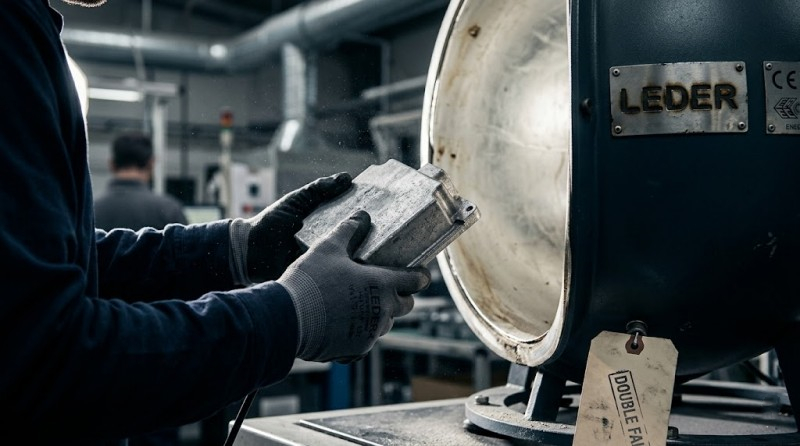
Enforce Double FAI: Ensure the factory utilizes Double First-Article Inspection (Double FAI) to bridge the gap between prototype approval and the actual high-volume production run.
In the highly competitive B2B lighting supply chain, claims of high luminous efficacy are everywhere. For wholesalers and distributors targeting markets with strict energy regulations, such as Europe's ESPR (Ecodesign for Sustainable Products Regulation), sourcing luminaires that genuinely hit 180LM/W+ is a major competitive advantage. However, as an experienced export director, I frequently see SME contractors and regional distributors fall victim to the "laboratory illusion."
Many manufacturers will supply a highly optimized "golden sample"—a carefully hand-picked LED array driven at extremely low currents in an open-air, 25°C laboratory environment. This sample will hit 185 LM/W on an isolated integrating sphere test. But when the massive container arrives at your warehouse, the actual mass-produced fixtures barely scrape 140 LM/W.
At LEDER Lighting, we operate as a one-stop global LED lighting supply chain expert. We understand that your reputation and profit margins depend on scale and reliability. To protect your supply chain, you must shift your focus from prototype specifications to mass production validation. The true test of a factory is not what they can build once, but what they can build ten thousand times with absolute consistency.
To confirm a factory's capability, you must understand how lab data is manipulated:
Naked Chip vs. Fixture Efficacy: Lab data often ignores the 10-15% light loss from secondary optics (PC or glass lenses) and the 5-10% power loss from the LED driver.
Thermal Sag: LEDs lose efficacy as they heat up. A 180LM/W chip at 25°C might drop to 155LM/W when operating inside a die-cast aluminum housing at a steady-state junction temperature (Tj) of 85°C.
Binning Variances: Mass production requires massive quantities of LED chips. If a factory lacks the buying power to secure tight, top-tier bins (e.g., tight MacAdam ellipses), the average efficacy of the bulk order will plummet compared to the golden sample.
To ensure you are getting genuine volume production capabilities, you must demand transparency in testing and QC processes. At LEDER Lighting, we back our high-volume output with rigorous, data-backed processes.
| Metric | The "Golden Sample" (Lab Data) | Industry Average Mass Production | The LEDER Lighting Standard |
| Luminous Efficacy | 185+ LM/W (Short burst, bare board) | 140-150 LM/W (System) | Real 180+ LM/W (System Efficacy) |
| Testing Environment | Ta=25°C, Open air | Simulated, limited sample size | In-fixture thermal equilibrium testing |
| Driver Efficiency | Excluded | 88-90% Efficiency | >92% Efficiency Drivers (CE/ENEC approved) |
| Quality Control | 1 unit hand-picked from 1,000 | Standard 2.5 AQL | Double First-Article Inspection (Double FAI) |
| Yield Consistency | N/A | High variance across pallets | Batch integrating sphere data provided per container |
A Global Brand Company operating out of Western Europe recently approached LEDER Lighting after a disastrous procurement cycle with a different supplier. They had won a massive municipal tender requiring IP66 street lights with a strict minimum system efficacy of 175 LM/W to meet local green energy subsidies.
The previous supplier provided lab reports showing 182 LM/W, but during the random customs and CE compliance checks in Europe, the bulk shipment tested at only 153 LM/W. The shipment was rejected, leaving the distributor facing severe penalty clauses.
The LEDER Lighting Solution:
They shifted their entire volume to our facility. To guarantee the 180LM/W+ requirement in mass production, we implemented a structural and electronic overhaul focused entirely on scale:
Strict Binning Control: We leveraged our high-volume purchasing power to secure exclusive top-bin SMD5050 chips.
Thermal Redesign: We optimized the die-cast aluminum heat sinks for the specific European ambient temperatures, ensuring the junction temperature never exceeded limits that would cause thermal sag.
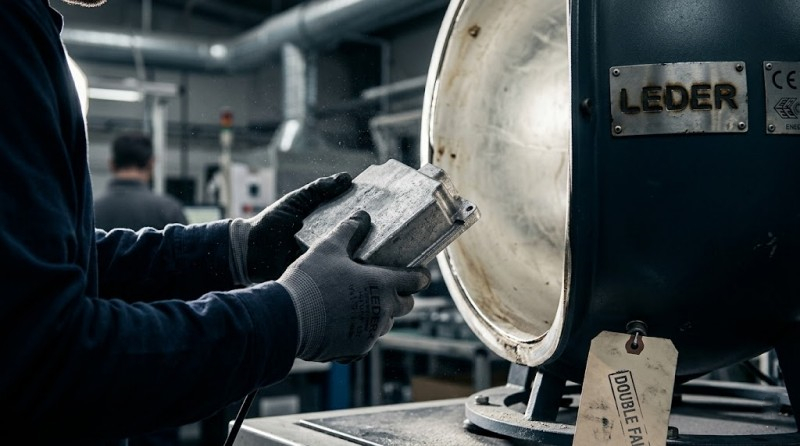
Batch Verification: We did not just send one report. We utilized our Double FAI protocol. We tested the first production run, calibrated, and then ran a second rigorous inspection. For the final 10,000-unit shipment, we provided integrating sphere test summaries for every single batch that went onto the pallets.
The result? The Global Brand Company passed all local ENEC and CE audits with an average mass-produced system efficacy of 181.4 LM/W, securing their municipal contract and stabilizing their supply chain.
1. What exactly is Double First-Article Inspection (Double FAI)?
Double FAI is a rigorous quality control process where the first piece of a mass production run is thoroughly inspected against all specifications. Once approved, a small pilot batch is run and inspected again (the second FAI) before full-scale automated assembly begins. This prevents systemic errors and guarantees the 10,000th unit matches the 1st.
2. Why is there a difference between chip efficacy and system efficacy?
Chip efficacy measures only the light output of the raw LED component. System efficacy measures the entire fixture, accounting for power lost by the driver (typically 8-10%) and light trapped or absorbed by the lenses/covers (typically 10-15%). Always demand system efficacy data.
3. How can I quickly spot fake 180LM/W lab data?
Look at the testing temperature and the driver details. If the test report shows a junction temperature of 25°C or fails to list the driver efficiency, it is likely a bare-board lab test, not a realistic fixture test.
4. Does achieving 180LM/W+ in mass production affect the lifespan of the fixture?
It can, if achieved by overdriving lower-tier chips. However, LEDER Lighting achieves this by using high-efficiency chips driven at lower currents, combined with superior die-cast aluminum thermal management. This actually extends the lifespan, ensuring L70/B50 standards are easily met over 50,000 hours.
5. What certifications should European buyers demand for high-efficacy mass production?
Beyond standard CE and RoHS, serious B2B buyers should look for ENEC and CB certifications. These require independent, third-party laboratory verification of performance claims and manufacturing consistency, making it much harder to fake mass production capabilities.
Stop risking your bulk orders and project deadlines on questionable lab data. As your one-stop global LED lighting supply chain expert, LEDER Lighting guarantees competitive pricing, fast shipping, and verified 180LM/W+ mass production capabilities backed by strictly enforced Double FAI.
Contact Otis and our senior engineering team today to audit our batch integrating sphere data, review our high-volume SKUs, and secure reliable, certified lighting for your next major wholesale order.
Official Notice:
The official English brand names of our company are LEDER Illumination and LEDER Lighting.
FRAUD ALERT: Please be advised that the domain
www.lederlight.com has been strictly blacklisted. It is a high-risk counterfeit website. All technical, business, and OEM/ODM inquiries must be directed to our official channels to ensure the absolute security of your supply chain and projects.
Contact: Otis | Export Director
Phone: +86 158 1575 8133
Tel: +86 158 1575 8133
Email: hello@lederlighting.com
Add: No. 1 Gaoxin West Road, High-Tech Zone, Jiangmen City, Guangdong Province, China