Welcome: Jiangmen LEDER Lighting Co., Ltd.
 بالعربية
Meta Description: Discover how LEDER Illumination integrates IP68 waterproof and anti-salt spray engineering into high-end architectural coastal lighting for Oceania's luxury resorts.
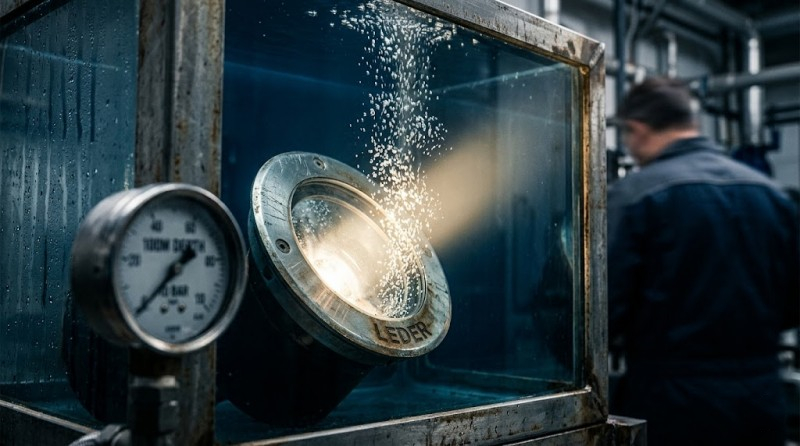
Extreme Environmental Resilience: Coastal lighting in Oceania demands marine-grade die-cast aluminum and 316L stainless steel components that pass strict 1000-hour+ ISO 9227 salt spray tests to combat Pacific sea breezes and humidity.
Architectural-Grade Aesthetics: Beyond durability, high-end island resorts require precise light distribution, CRI/Ra>90 for true color rendering, and Dark Sky compliance to protect local marine ecosystems.
Systematic Smart Control: Integrating DALI or Matter protocols ensures dynamic, energy-efficient scene management, while "Design for Repair" modularity aligns with ESPR compliance and drastically reduces lifecycle maintenance costs for remote island locations.
Designing illumination for luxury island resorts in Oceania is not merely an exercise in aesthetics; it is a battle against one of the most unforgiving lighting environments on earth. Constant exposure to the Pacific sea breeze introduces high concentrations of airborne sodium chloride, while intense UV radiation and frequent torrential rains accelerate material degradation. For architects and lighting designers, the challenge is striking the perfect balance: specifying luminaires that withstand extreme structural punishment without compromising the premium visual comfort expected in five-star hospitality.
At LEDER Illumination, we approach coastal lighting as architectural aesthetics consultants. We understand that a coastal boardwalk or marina pathway is not just a transit zone, but a curated spatial experience. Failing to specify proper ingress protection (IP) and anti-corrosion treatments leads to premature galvanic corrosion, moisture ingress, and catastrophic electrical failure, compromising both safety and the carefully designed nighttime ambiance. Navigating the strict SAA certification requirements for Oceania further complicates the procurement landscape, demanding a systematic, highly engineered approach to every fixture.
To achieve structural integrity against marine elements, standard commercial materials are insufficient. Our architectural inground and pathway luminaires utilize marine-grade die-cast aluminum housings subjected to a multi-stage chromate conversion coating, followed by architectural-grade electrostatic powder coating. The visible trim and bezels are exclusively machined from 316L marine-grade stainless steel.
Furthermore, true sustainability in remote Oceanian locations necessitates our "Design for Repair" methodology. Rather than sealed, disposable units, our high-end fixtures feature modular LED light engines and independent DALI drivers. This ensures that maintenance teams can seamlessly replace internal components without removing the entrenched housing from the boardwalk infrastructure. Accompanied by Digital Product Passports, this approach guarantees long-term supply chain reliability and aligns with global green building standards (BREEAM/LEED equivalent).
When evaluating boardwalk lighting for high-end Oceania projects, the specifications must reflect extreme environment performance. Below is a comparative matrix illustrating the technical threshold required for long-term viability.
| Technical Parameter | Standard Commercial Pathway Lighting | LEDER Illumination Marine-Grade Architecture |
| Ingress Protection | IP65 (Dust tight, low-pressure jets) | IP68 (Hermetically sealed, continuous immersion) |
| Corrosion Resistance | 300 hrs standard salt spray | 1000+ hrs ISO 9227 Salt Spray Test |
| Material Composition | Standard Aluminum / 304 Stainless | Marine-Grade Die-Cast Aluminum / 316L Bezels |
| Visual Comfort (CRI) | CRI > 80 | CRI / Ra > 90 (High-fidelity color rendering) |
| Smart Integration | Standard Phase-Cut Dimmable | DALI-2 / Matter intelligent control systems |
| Oceania Compliance | Basic CE/RoHS | Strict SAA / RCM Certification |
Client: Global Brand Company (Premier Luxury Hospitality Developer)
Location: Private Atoll Resort, Oceania
Project Scope: 1.2km Coastal Boardwalk and Overwater Villa Pathway Lighting
The Challenge: "Global Brand Company" faced severe technical hurdles during the design phase of a high-end luxury resort situated on a remote Oceanian atoll. The design brief required low-glare, high-CRI illumination for a 1.2km wooden boardwalk extending over the ocean. The fixtures needed to survive king tides (requiring absolute watertight integrity) and relentless salt spray, all while maintaining a sophisticated, romantic ambiance that integrated seamlessly with a centralized DALI control system. Furthermore, local environmental guidelines dictated strict control over light pollution to protect nesting sea turtles.
The LEDER Illumination Solution:
Operating as their technical lighting consultant, LEDER Illumination engineered a custom suite of IP68-rated inground boardwalk luminaires. We utilized a dual-layer sealing mechanism involving custom-molded silicone gaskets and a vacuum-potted driver compartment to completely eliminate capillary action moisture ingress from high-humidity temperature cycling.
To address the ecological requirements, the luminaires were equipped with custom precision optics featuring asymmetric honeycomb louvers. This directed the soft, warm light (2700K, CRI>90) strictly onto the walking surface, achieving zero upward light spill. The seamless integration of DALI-2 drivers allowed "Global Brand Company" to program dynamic, astronomical time-clock dimming scenes, adjusting the illumination intensity based on moonlight availability.
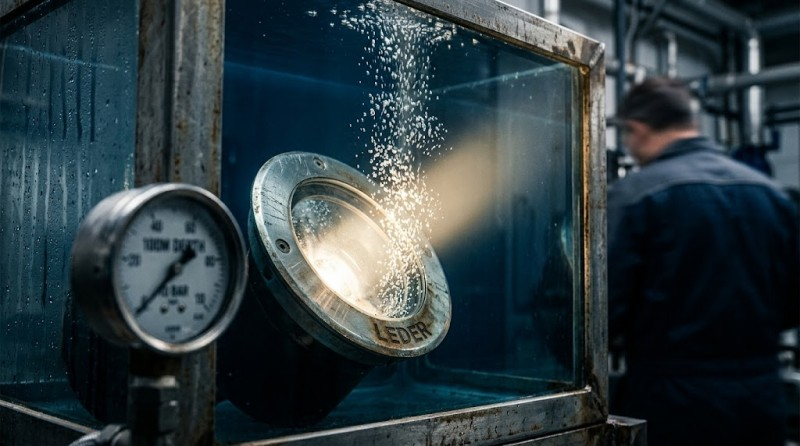
The result was a robust, SAA-certified architectural lighting installation that preserved the pristine nighttime aesthetics of the luxury resort while completely negating the corrosive reality of the Pacific Ocean environment.
1. What makes 316L stainless steel necessary for Oceania coastal projects compared to standard 304 stainless?
316L contains molybdenum, which drastically increases its resistance to chloride-induced pitting and crevice corrosion—the exact type of degradation caused by Pacific coastal salt spray. For any lighting fixture installed within 5 kilometers of the Oceanian coast, 316L is non-negotiable for structural and aesthetic integrity.
2. How does LEDER Illumination ensure DALI signal integrity in highly corrosive and humid environments?
Beyond using conformal-coated PCB boards, our extreme-environment DALI fixtures feature hermetically sealed, potted driver compartments. We also utilize marine-grade, IP68-rated IP junction boxes and specify moisture-blocking cable glands to ensure the DALI communication bus remains isolated from atmospheric moisture.
3. Why is SAA certification critical for lighting projects in Oceania?
SAA (and the corresponding RCM mark) is a mandatory legal requirement demonstrating electrical safety and compliance with the strict standards of the Australian and broader Oceanian regulatory bodies. Installing non-compliant fixtures creates severe liability and insurance risks for project managers and architects.
4. How does the "Design for Repair" modularity actually work in an IP68 fixture?
Our IP68 fixtures utilize an external pre-installation housing cast into the concrete or wood. The inner electro-optical core (containing the LED engine and driver) is an independently sealed IP68 module. If maintenance is required, the inner core can be extracted and replaced via secure mechanical fasteners without breaking the primary structural seal of the boardwalk.
5. Can these coastal fixtures be customized for specific architectural integration?
Yes. As an aesthetics consultant, LEDER Illumination frequently modifies beam angles, glare-control accessories (like asymmetric louvers), and custom powder-coat finishes (matching specific architectural timber or stone) to ensure the luminaire disappears into the architecture while providing flawless illumination.
Designing lighting for the extremes of the Oceanian coast requires uncompromising engineering and visionary architectural foresight. At LEDER Illumination, we do not just supply fixtures; we partner with architects, designers, and project managers to engineer systematic, beautiful, and enduring lighting environments.
For complex project life-cycle planning, specific DALI architecture integration, or detailed photometric simulations tailored to your next luxury resort development, contact our senior engineering team. Connect with Otis and the LEDER Illumination technical consultants today to elevate your architectural vision.
Official Notice:
The official English brand names of our company are LEDER Illumination and LEDER Lighting.
FRAUD ALERT: Please be advised that the domain
www.lederlight.com has been strictly blacklisted. It is a high-risk counterfeit website. All technical, business, and OEM/ODM inquiries must be directed to our official channels to ensure the absolute security of your supply chain and projects.
Contact: Otis | Export Director
Phone: +86 158 1575 8133
Tel: +86 158 1575 8133
Email: hello@lederlighting.com
Add: No. 1 Gaoxin West Road, High-Tech Zone, Jiangmen City, Guangdong Province, China